Exploring the Practical Uses of Nano Banana Pro in Visual Content Creation
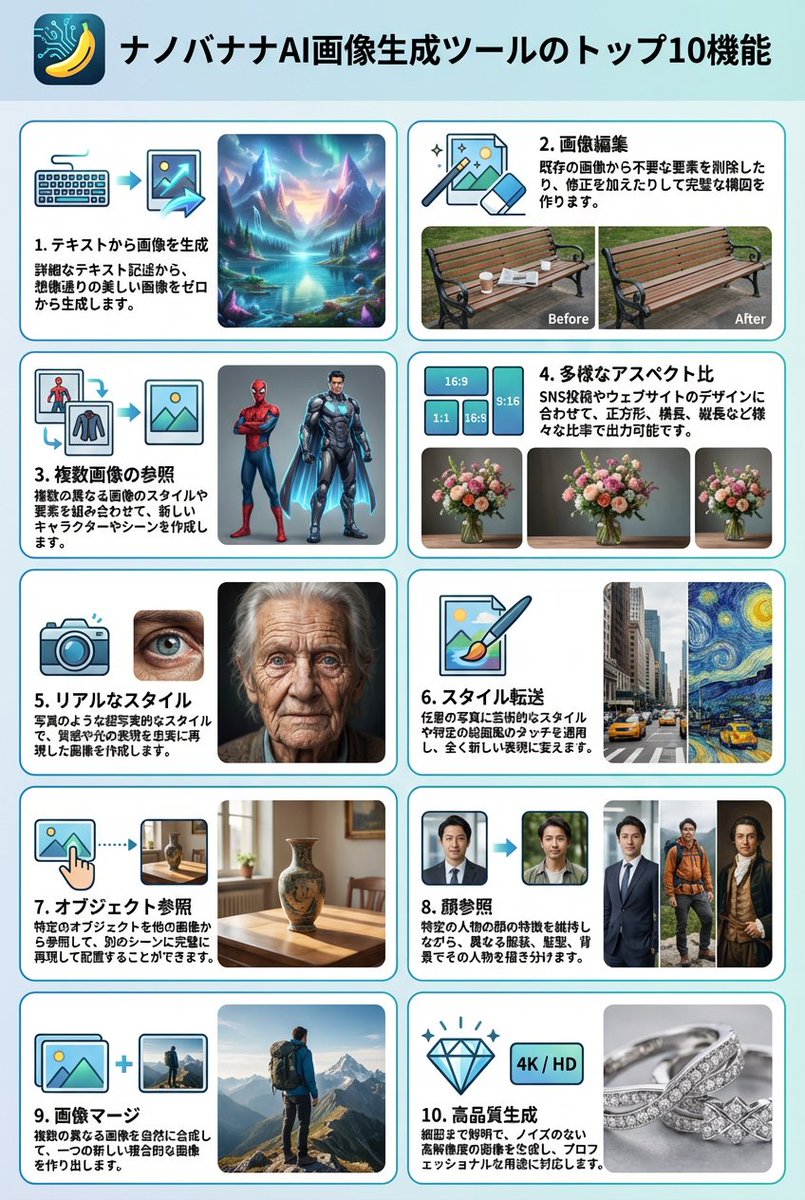
When I first started working with AI image generators, I was skeptical about how well they could handle the nuances of real-world physics and professional-grade output. That skepticism faded quickly after I spent a few weeks with Nano Banana Pro, a physics-aware AI image generator that produces 4K resolution images with impressive consistency. The tool is built around Google Gemini 3 Pro technology, which gives it a strong foundation in machine learning and computer vision. What sets it apart for me is how seamlessly it integrates prompt engineering with natural language processing, allowing me to describe a scene in plain English and get back something that actually looks like a photograph, not a surreal painting.
Understanding the Core Technology
The backbone of Nano Banana Pro is a neural network that has been trained on millions of images, but it goes beyond simple pattern matching. The physics simulation layer ensures that light behaves realistically, shadows fall correctly, and materials reflect or absorb light as they would in the real world. This is a huge step forward from earlier text-to-image models that often produced visually appealing but physically impossible results. For example, if I ask it to generate a product shot of a glass bottle on a wooden table with afternoon sunlight coming from the left, the resulting image has the right highlights, the correct refraction through the glass, and a soft shadow that matches the angle of the light source. That level of detail is hard to achieve without a solid grasp of physics-aware rendering.
Another component that makes this tool stand out is the image enhancement pipeline. Even at 4K resolution, raw generator outputs can look a bit flat. The built-in upscaling algorithm and high dynamic range processing bring out details in both shadows and highlights, which is critical for product photography and digital art where subtle gradients matter. I have used it to create mockups for client presentations, and the images hold up well when projected on a large screen or printed at high resolution.
Practical Workflow with Prompt Engineering
Prompt engineering is where the real craft comes in. You cannot just type "a nice photo" and expect a masterpiece. With Nano Banana Pro, I have learned to be specific about lighting, composition, and the mood I want. For instance, instead of "a car on a road," I write "a red sedan parked on a wet asphalt road at dusk, with streetlights reflecting on the surface, shallow depth of field." The natural language processing layer interprets those modifiers accurately, and the physics simulation handles the reflections on the wet road realistically. This level of control saves me hours of manual editing in a creative suite.
I have also experimented with the multilingual support, which allows me to write prompts in several languages and still get coherent results. That is useful when collaborating with international teams who prefer to describe concepts in their native tongue. The response quality does not degrade noticeably between languages, which suggests the underlying model has been trained on diverse linguistic data.
Comparison with Other Tools
Before settling on this workflow, I tried several other AI image generators. Many of them produce beautiful images but lack consistency when you need multiple shots of the same subject under different conditions. Nano Banana Pro handles variation well because the physics simulation keeps the subject's form stable while altering the lighting, angle, or background. For visual content creation at scale, that consistency is a lifesaver. I once needed to generate twenty variations of a product shot for an A/B test on an e-commerce site. The tool produced them in under an hour, and the team could not tell which were real photos and which were generated.
Limitations and Trade-offs
No tool is perfect, and Nano Banana Pro has its quirks. The generative AI can sometimes create unintended artifacts when the prompt is too abstract or contradictory. For example, asking for a "fuzzy metallic surface" confuses the physics model because fuzziness and high metallic reflectivity rarely coexist in nature. In those cases, I have to rephrase the prompt to be more physically plausible. The image enhancement pipeline can also oversharpen edges in complex scenes, so I usually run a final check before using the output in a client deliverable.

Another consideration is computational demand. Generating 4K images with full physics simulation takes time and GPU resources. On a standard workstation, each image can take several minutes. That is acceptable for professional work but not for rapid prototyping. If you need real-time feedback, you might want to preview at a lower resolution first.
Real-World Use Cases
I have found Nano Banana Pro most useful in three areas:
- Product photography for e-commerce, where you need clean, consistent shots of items that do not exist as physical prototypes yet.
- Concept art for game design, where the physics simulation helps visualize environments with realistic lighting and material properties.
- Marketing visuals for campaigns that require multiple variations of a theme without a full photoshoot budget.
In each case, the combination of text-to-image generation with physics-aware rendering reduces the gap between imagination and final output. I have even used it to generate background plates for video production, which saved my team from needing to travel to a specific location just for establishing shots.
Looking Ahead
The field of generative AI moves fast. Tools like Nano Banana Pro are pushing the boundaries of what is possible with a text prompt and a neural network. As computer vision models improve and machine learning hardware becomes more accessible, I expect the quality and speed of these tools to increase further. The inclusion of multilingual support also hints at a future where language barriers in visual content creation become less relevant. For now, I treat it as a powerful addition to my creative suite, not a replacement for traditional skills. The best results still come from knowing how to frame a prompt, how to critique the output, and how to integrate it into a larger workflow.
If you work in digital art, product photography, or any form of visual content creation, giving Nano Banana Pro a serious trial run is worth your time. It will not replace your camera or your stylist, but it will expand what you can produce on your own. Just remember to treat prompt engineering as a skill you develop over time, not something you master overnight.